Can You Land A Plane How to Land the Plane
A deep landing tutorial for finals, flares, bounces, and dirty-weather approaches.
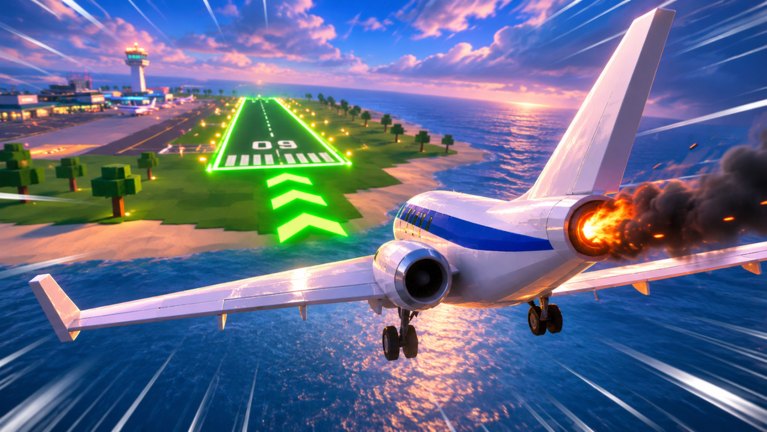
This is the deep how to land guide for Can You Land A Plane. The entire fantasy starts with a sleeping captain and a runway that will not move for your feelings. If your touchdowns are bounced, floated, or short into the grass, fix technique here before you blame the airframe or hunt unsafe tools on the Scripts Hub.
Pair this article with Controls so your inputs match the advice, and with Getting Started if you still need the Student Permit context.
Landing goals (what “good” looks like)
- On centerline through short final
- Stable descent — not a roller coaster of pitch pumps
- Gear down and configured early enough that you are not multitasking at fifty feet
- Flare that bleeds sink rate without ballooning back into the sky
- Rollout that clears the runway for the next of up to 12 players on the server
Cash jobs and flight tests both assume you can repeat that standard. Passenger and rescue contracts punish rough arrivals hardest — see Jobs.
Phase 1 — Setup and pattern thinking
Even when the game throws you straight into an emergency, invent a mental pattern:
- Identify the runway and which way traffic is flowing. ATC callouts help on island hops; listen.
- Configure early. Gear and flaps (or the game’s equivalent assist toggles) belong on a checklist, not a panic mash.
- Aim for a fixed aim point near the numbers, not the far end and not the grass threshold.
- Control energy with a mix of pitch and power. Pitch mostly aims the nose; power mostly manages energy. Mashing both randomly creates porpoising.
If a co-pilot is aboard, have them call altitude and runway alignment while you fly — habits covered on the Players Hub.
Phase 2 — Final approach
On final you want small corrections:
- Lateral: bank gently to slide back to centerline, then unwind the bank so you do not land sideways.
- Vertical: if you are high and fast, reduce power first; if you are low and slow, add energy before you yank the nose up into a stall-y drop.
- Visual scan: runway, then airspeed/sink cues, then runway again. Staring at only one instrument (or only the horizon) is how people drift.
Crosswinds — a marketed hazard in this experience — need a wing-low or crab correction depending on what the plane allows. Practice in light wind before you take storm contracts.
Phase 3 — The flare and touchdown
The flare is where beginners throw the tutorial away.
- When the runway starts to expand quickly and height feels “close,” begin a smooth pitch-up to break the descent.
- Stop chasing the perfect cinematic nose-high selfie. You want main gear to touch with low vertical speed.
- If you balloon (climb away in the flare), a tiny pause and patience beats slamming the nose down.
- If you drop in from too high, go around when available rather than forcing a gear-breaking hit.
After touchdown, keep tracking centerline. Vacate when safe so ATC sequencing stays friendly.
Go-arounds without ego
A go-around is a win, not a failure. Reasons to abandon the landing:
- Another jet still blocking the runway on a full server
- Unstable lateral oscillations inside short final
- Sudden weather shift you are not rated to fight yet
- Passenger job where a crash costs more than the delay
Add power, establish a climb, clean up configuration when safe, and re-enter the pattern. License examiners would rather see a safe miss than a heroic crater — prep via Licenses.
Weather, night, and specialty landings
| Condition | Extra focus |
|---|---|
| Crosswind | Centerline discipline; avoid downwind drift in the flare |
| Storms | Earlier go-around mindset; smaller bank angles |
| Night | Trust lighting and ATC; avoid descending into black holes short of the threshold |
| Short island strips | Energy management — being hot is worse than being slightly firm |
Unlock these challenges after calm-weather consistency. The Tier List can wait; surviving finals cannot.
Training drills you can repeat
- Centerline only — ignore perfect sink rate for three landings; only track the paint.
- Power discipline — change power in clicks, not panic holds.
- Flare timing — pick a visual cue (runway width, lighting) and flare at the same cue every time.
- Co-pilot calls — fly while a friend only speaks sink and lineup.
- Night after day — same runway, darker lighting, same numbers.
Log what breaks. Usually it is one habit, not “the whole plane.”
How landing skill unlocks the economy
Smooth arrivals:
- Finish cargo without damage fees
- Keep passengers willing (and payouts healthy)
- Make crop-dust passes precise enough to count
- Survive rescue scenarios that pay like S-tier work
That economy funds flight tests and better aircraft. Skipping straight to prestige jets without landing reps is how bankrolls die. Review purchase order on the Tier List Hub.
Troubleshooting quick chart
| Symptom | Likely cause | Fix |
|---|---|---|
| Float forever | Too much energy / early flare | Less power; flare later |
| Drop-in slam | Late flare or slow + idle | Add energy; start flare sooner |
| Left/right swerve | Over-banking corrections | Smaller banks; unwind before touchdown |
| Porpoising | Pumping pitch after bounce | Hold steady; go around if needed |
| “Controls feel random” | Bad sensitivity / drift | Recalibrate in Controls |
Mindset
You are not failing the fantasy when you miss. The premise is chaos — sleeping captain, weather, busy islands. Professional energy means predictable approaches. Watch the overview on Getting Started if you still need system context, then come back here for reps.
Related pages
- Getting Started
- Controls
- Jobs
- Licenses
- Players Hub
- Guides Hub
- Updates after physics-facing patches
Frequently Asked Questions
Quick answers for landing, licenses, codes, and jobs.
What is the most important part of landing?
A stable final on centerline with controlled energy. The flare only works if the approach is already calm.
When should I go around?
Whenever the approach is unstable, the runway is blocked, or weather exceeds what you can safely fly. Go-arounds protect jobs and licenses.
How do I fix bouncing after touchdown?
Avoid pumping the nose. Hold a steady attitude, use patience if you balloon, and go around instead of forcing a second hard hit.
Should I practice storms first?
No. Master clear-weather landings, then add crosswind, night, and storms.
Do I need a co-pilot to land well?
No, but a co-pilot calling sink and lineup helps on busy or weather-heavy approaches.
Will better planes land for me automatically?
No. Higher tiers still need technique. Unlock order is covered on the Tier List and Licenses guides.